Anger is a normal human emotion. When it begins to affect a man's relationships, work or wellbeing, developing healthier responses can make a lasting difference.
SEPAC Pathway provides a structured therapeutic approach specifically for men, helping them understand their anger, develop alternative responses and practise new ways of responding
Counselling and support for men developing healthier responses to anger.
Anger isn't the problem
Everyone experiences anger.
The difficulty is not feeling angry. The difficulty is what anger can lead us to do.
For some people, anger results in shouting, aggression, conflict, intimidation, damaged relationships or behaviour they later regret.
SEPAC Pathway helps people understand these patterns and develop healthier, more effective ways of responding.
The Sepac Pathway approach.
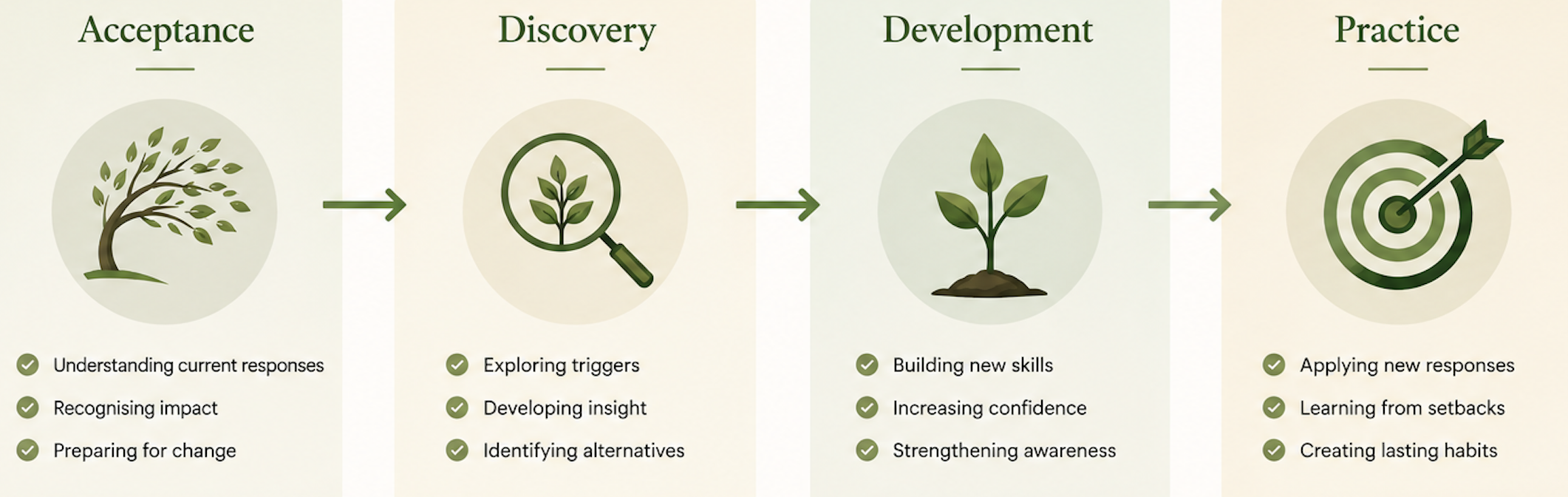
SEPAC Pathway is a structured therapeutic approach that supports people to develop healthier responses to anger.
The approach follows four stages: Acceptance, Discovery, Development and Practice.
Who we help
SEPAC Pathway supports men who want to develop healthier responses to anger through a structured therapeutic approach. We also welcome referrals from professionals seeking support for men they work with.

Individual support
Men who want to understand their anger, reduce harmful responses and develop healthier ways of responding.

Professionals
Support for GPs, counsellors, social workers and other professionals seeking therapeutic support for men experiencing difficulties with anger.
Why choose SEPAC Pathway?
SEPAC Pathway provides a structured therapeutic approach that combines psychological understanding with practical strategies for healthier behavioural change.
Grounded.
Our approach is grounded in established psychotherapeutic principles and contemporary understanding of behaviour change and emotional regulation.
Collaborative.
We work alongside each person to understand their experiences, identify meaningful goals and develop healthier responses together.
Practical
The focus is not simply understanding anger, but developing and practising alternative responses that can be used in everyday life.